News Under the Sun: RES - A Case Study of the First GWO Member to Adopt the Global Solar Training Standards
The first in a series, this article begins with exploring GWO member company RES' experience with adopting the Global Solar Training Standards.

When the Global Solar Council (GSC) and Global Wind Organisation (GWO) released the Global Solar Training Standards in 2025, their intention was clear: to support the transformation of an industry traditionally characterised by low levels of safety, inconsistent quality of build and sub-optimal operations. Indeed, what GSC and GWO had realised through the development of the Global Solar Training Standards is that these challenges can largely be addressed through improved and standardised training, particularly during the construction phase of solar projects.
While the launch of the Standards has already led to new partnerships and valuable learnings, the road ahead will require continued commitment and adoption from leading industry players.
In this article, we focus on RES, the first company to adopt the Global Solar Training Standards in full. But first, a look back at the successes that preceded it.
From Safety Training to Workforce Development
17 years have passed since 13 leading wind turbine manufacturers and operators founded GWO as a not-for-profit organisation with a shared ambition: to create a safer, injury-free working environment in the wind industry.
Since then, GWO has grown to more than 30 members, representing a significant share of the global wind workforce. The organisation has expanded its portfolio well beyond safety, to 19 Training Standards covering both safety and technical competencies, and has issued more than three million training records through a global network of over 650 third-party Training Providers.
With this experience and global reach, GWO was well positioned to respond when, in 2023, members began exploring how the proven wind training framework could be applied to the solar PV industry.
Making the Case for Standardised Safety Training in Solar PV
The solar PV industry is characterised by fragmentation at multiple levels: the number and size of companies, technologies and components, workforce availability and competence and the lack of aligned standards and regulatory frameworks.
As a result, the industry continues to face challenges related to non-uniform construction practices and variable quality of build. These are issues that can impact long-term asset performance, uptime and efficiency.

At the same time, the industry is expanding at a rapid pace. According to the International Renewable Energy Agency, IRENA, the solar sector employed 7.24 million people in 2024. Solar energy also accounted for approximately 75% of total renewable capacity additions in 2025. Forecasts from BloombergNEF further point to continued growth in utility-scale solar towards 2030.
It was against this backdrop that collaboration between GWO and the Global Solar Council began in early 2024, with the aim of introducing a global training framework tailored to the needs of solar PV technician employers.
This collaboration resulted in a positioning paper, the development and piloting of the first Training Standards in early 2025 and the official launch of the Global Solar Training Standards later that year.
RES: The First GWO Member to Fully Adopt the Global Solar Training Standards
Having joined GWO only a few months before, RES brought more than 40 years of innovation to the table as GWO’s Solar Training Committee was established with RES’ Dennis Elsberg, VP of HQSE and Competence Management, Global Services, as Chair.
RES’ approach reflects a clear alignment between its view of people as the driving force behind delivering clean energy, its commitment to safety and the business need for globally aligned competencies to support workforce flexibility and mobility.
This alignment led to RES becoming the first GWO member to adopt the Global Solar Training Standards as a foundational requirement.
"Treat the Standards as an Investment, Not a Compliance Exercise"
In an early interview, Dennis Elsberg emphasised that safety training in the solar industry should not be viewed as a compliance exercise. Instead, RES´s experience in implementing the Global Solar Training Standards in Spain has shown that embedding training into the organisation’s foundation, from recruitment and onboarding through to continuous development, supports both the structured recognition of existing workforce competence and long-term performance improvement, while also creating a clear competitive advantage.
This perspective was reinforced during GWO’s visit in February 2026 to the OPEA Casa Valdez solar farm in Spain. Commissioned by RWE in 2022, the 44 MW site supplies clean energy to approximately 30,000 homes. Supported by RES’ trained operations and maintenance technicians, this solar site contributes to safe working practices, consistent service delivery and efficient operations.
Integrating the Global Solar Training Standards into the Core Foundation
As one of the world’s largest independent renewable energy companies, RES manages approximately 45 GW of projects across development, construction and operations. Its portfolio spans onshore and offshore wind, solar, energy storage, green hydrogen and transmission and distribution. With around 4,500 employees, including approximately 900 in construction and 2,500 in services, structured competence development is central to ensuring both safety and quality.
Dennis Elsberg, explains:
As a global leader in the energy transition, we have a responsibility to combine talent, technology and opportunity to deliver high-quality energy solutions. Within our internal competency framework, we use a combination of e-learning, virtual reality environments, in-house training centres, third-party providers and on-site training. When the Global Solar Training Standards were launched, we made them a requirement for Solar Service technicians in Spain, and in the first three months of the year following certification, we have trained and accredited 60 experienced renewable energy technicians. Furthermore, using the merit process, we have trained more than 200 technicians in Spain in accordance with the GWO standards.
And with nearly 1000 solar training records issued so far, the Global Solar Training Standards are fast becoming the industry benchmark for training which ensures a high level of quality and safety for solar technicians working on site.
Safety and Expertise as Competitive Advantages
For RES, workforce competence has proven to be not only a safety priority, but also a commercial differentiator.
We recently underwent an unannounced audit by a potential customer assessing our suitability as a service provider. Following a detailed site visit, including to our solar training facility, we achieved a top score.There is no doubt that technician training, and the safety and quality it enables, represents a significant commercial opportunity,
Dennis Elsberg elaborates.
In addition, RES is beginning to observe potential financial benefits, including early indications of reduced insurance costs linked to improved risk profiles.
Scaling Adoption: Opportunities and Challenges
As a first mover in adopting the Global Solar Training Standards, RES has also faced implementation challenges, particularly in markets where access to training within the Global Solar Training Standards infrastructure is still developing.
In response to these challenges, the company is exploring:
- Expansion of in-house training facilities to other regions
- Development of mobile training solutions combining wind and solar
- Engagement with the growing global network of GWO Training Providers with the Solar Training Standards on scope
At the same time, RES continues to support broader industry alignment.
In the long term, we aim to fully integrate the Global Solar Training Standards into our baseline training requirements for all entry-level solar technicians. Together with GWO and other industry partners, we have also begun mapping job roles and competencies beyond the foundational level,
Dennis concludes.
Looking Ahead
RES’ adoption of the Global Solar Training Standards represents an important step in the evolution of the solar PV industry.
The Spanish implementation demonstrates that legacy workforce training systems can be successfully aligned with global standards through structured gap analysis, auditor collaboration, and targeted upskilling.
As adoption increases, the opportunity only becomes clearer: to build a safer, more consistent and more scalable industry, supported by a globally aligned, competent workforce.
In upcoming articles, we will explore the meriting process in more detail, share perspectives from Training Providers and outline how organisations across the value chain can engage with the Standards.
Want to learn more about the Global Solar Training Standards?
Featured stories
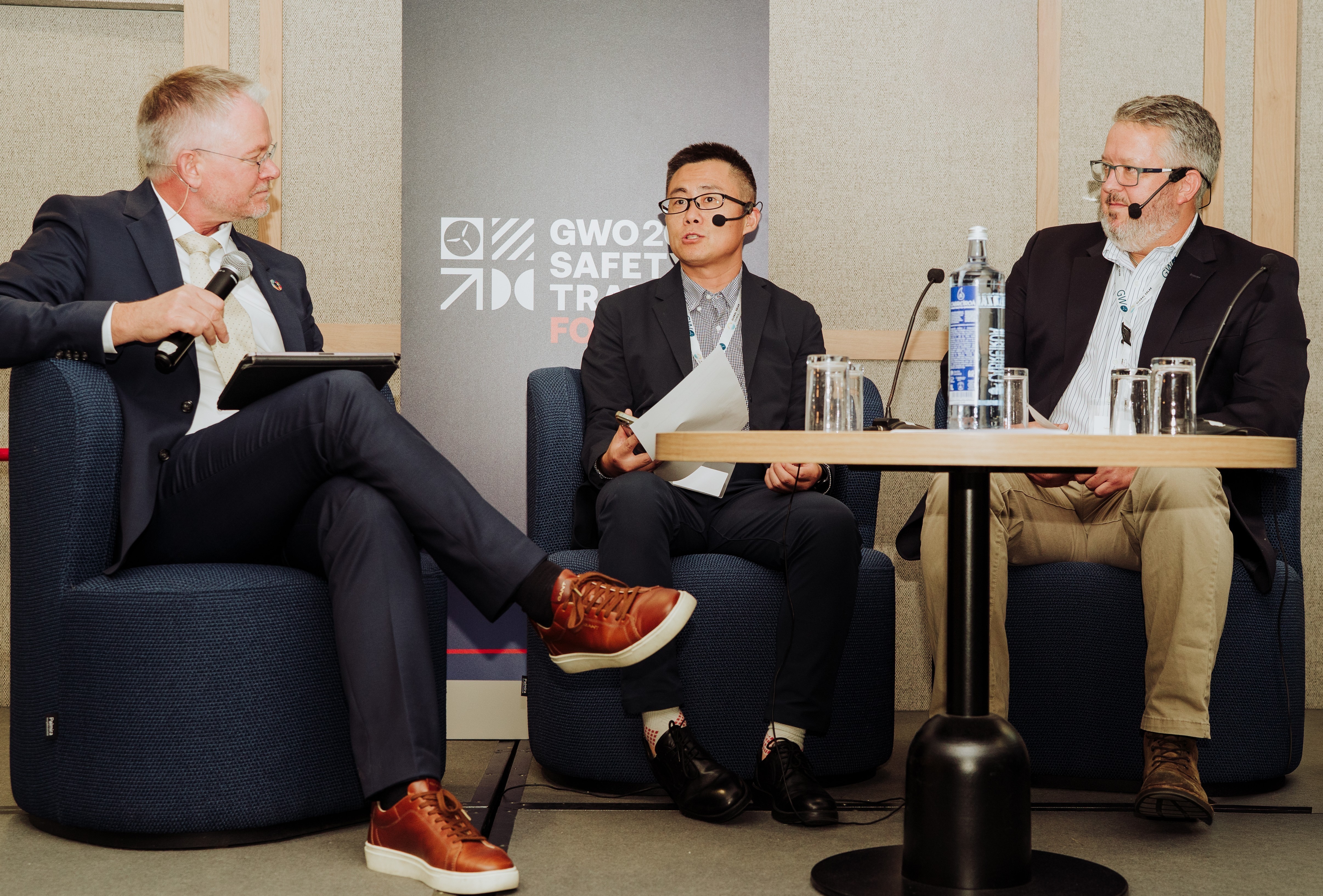
Strategy 2030: GWO Members’ Voices at Forum ’26
As we approach the GWO Safety & Training Forum & Awards 2026, learn more about what’s next for GWO’s workforce development agenda in the opening session of this year’s programme.

GWO Standards Update: Six-Month Grace Period Ends 10 September 2026
Important updates to GWO Training Standards come into full effect on 10 September 2026.
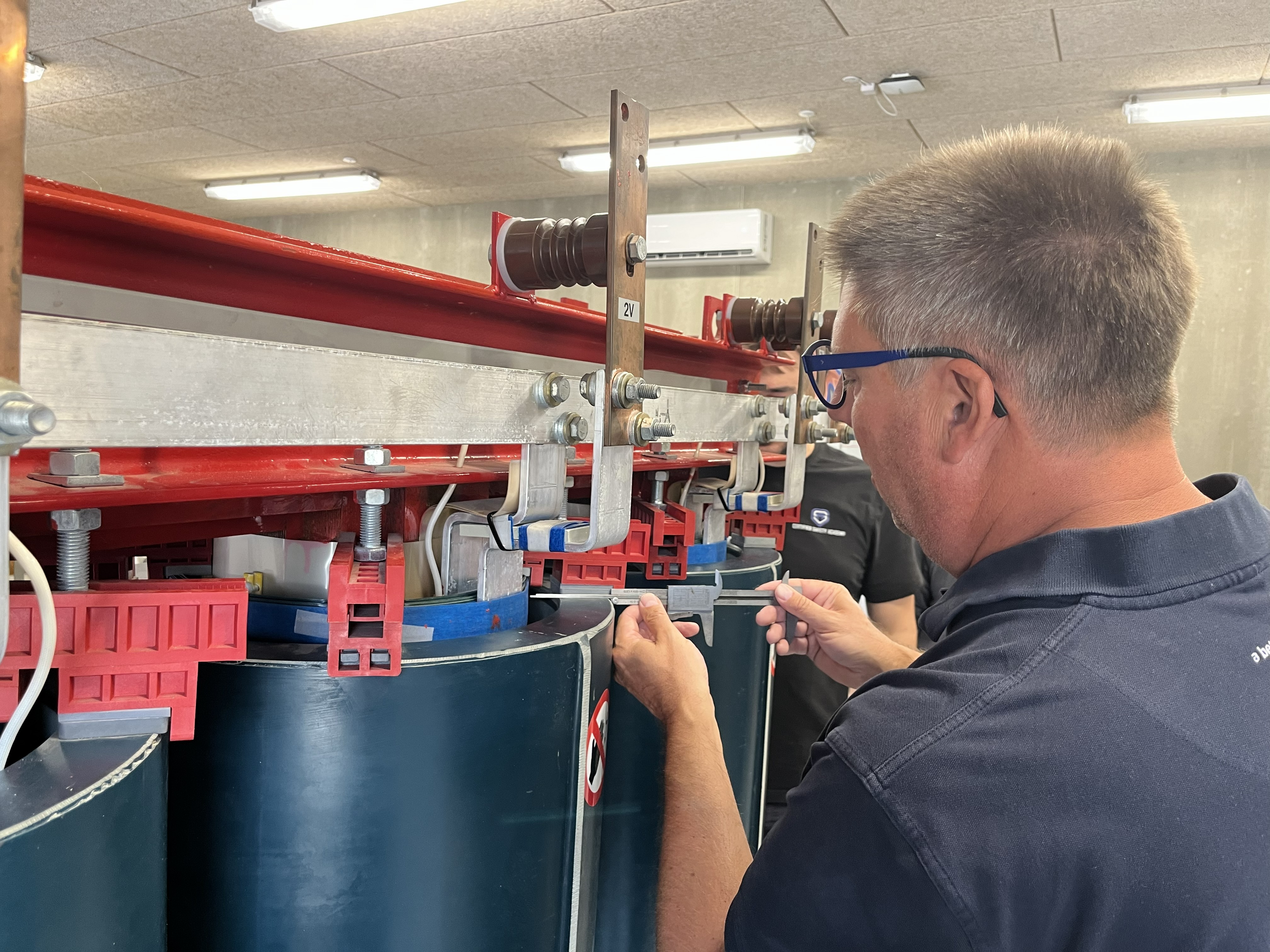
Final Round of Pilots for New High Voltage Modules Reaches Completion
GWO has completed the final pilot of its new High Voltage T-Connector Installation and Transformer Maintenance modules, with feedback from four pilots now set to inform the final training content ahead of release later this year.

Forum ’26: Clarifying Competence for an Evolving Workforce
Explore what competence means in practice in a member-led conversation at the GWO Safety & Training Forum & Awards 2026.

Put Your Products in Front of the Wind & Solar Safety Community
Get your equipment in front of the industry at the GWO Safety & Training Forum in Paris.

Celebrating Excellence: Meet the 2026 GWO Instructor of the Year Finalists
Meet the outstanding talent in our 2026 Instructor of the Year shortlist!