Mapping the Workforce Shift: Technician Demand in Australia Calls for Strong Workforce Skills Development
The rising demand for wind energy puts pressure on global markets, with varying impacts on each region, including Oceania and Asia. As the largest wind market in Oceania, Australia will require up to 9,000 technicians per year between now and 2030 to meet energy needs.

According to the latest GWWO report published in collaboration with the Global Wind Energy Council (GWEC), the direct technician demand for Construction & Installation (C&I) and Operations & Maintenance (O&M) full-time equivalents (FTEs) on onshore projects in the Australian wind industry between now and 2030 could reach up to 9,000 technicians per year. This estimate is consistent with the global trend of mounting pressure on the C&I and O&M parts of the value chain, as the world’s wind fleet continues to expand. In the case of Australia, roadblocks such as permitting, grid and social licence to operate, alongside infrastructural deficits and skills shortages, all pose a challenge to building the domestic supply chain necessary to meet the demand for skilled wind industry professionals.
A Growing Policy Response to Wind Energy Demand
Onshore wind power alone generated 13.4% of Australia’s electricity in 2024. And to meet the federal government’s target of 82% renewables by 2030, federal and state governments have mobilised the expanded Capacity Investment Scheme (CIS) to streamline assessment processes and reduce commercial risks for investment in renewable energy projects. By the end of 2023, 19 onshore wind projects with a capacity of 5.8 GW were under construction or had been committed, and the CIS scheme will provide revenue underwriting for 23 GW of new large-scale generation and 9 GW of dispatchable capacity by 2027.
A landmark moment for the country equally arose for offshore wind when the state of Victoria legislated its 2 GW by 2032, 4 GW by 2035 and 9 GW by 2030 targets, under the Climate Change and Energy Legislation Amendment Act 2024. Yet, in spite of the promising policy backing in recent years, the wind industry in Australia now needs more skills development initiatives, underscored by a strong national strategy, to make workforce development a reality.
Addressing the Skills Shortfall in the Wind Industry through Workforce Development
While the Clean Energy Council’s “Winds of Opportunity” report has demonstrated the great potential for Australia’s offshore wind industry to create hundreds and even thousands of employment prospects in construction, operations and maintenance roles, particularly in areas affected by the coal transition, there is still a looming shortfall of professionals. According to the Powering Skills Organisation 2025 Workforce Plan, a national jobs and skills council for the energy industry, has shown that the country could face a deficit of approximately 42,000 renewable energy workers.
With project-critical roles in C&I and O&M overlapping with significant workforce gaps, the GWWO report offers several recommendations to address these gaps, including:
- a coordinated national workforce strategy that brings federal initiatives into alignment will ensure that technicians can be assigned to local wind and transmission projects;
- investment and training support from the previously mentioned Capacity Investment Scheme, as well as organisations such as the Australian Renewable Energy Agency;
- the presence of skills partnerships, such as the one established between Ocean Winds (OW) & Federation University, to serve as an example of how cross-sectoral skills collaboration can support countries in prioritising local skills and training to meet growing workforce needs.
About GWEC
GWEC is a member-based organisation that represents the entire wind energy sector. The members of GWEC represent over 1,500 companies, organisations and institutions in more than 80 countries, including manufacturers, developers, component suppliers, research institutes, national wind and renewables associations, electricity providers, finance and insurance companies.
Find us at: https://gwec.net/.
Follow us on LinkedIn and Instagram.
Contact
Alex Bath, Communications Director, alex@bath.gwec.net
About GWO
GWO is a not-for-profit industry association founded and owned by its members who are drawn from globally leading renewable energy manufacturers, owners and operators. Our members strive for an injury free work environment, setting common international standards for safety training and workforce development. Since 2012, GWO training standards have become widely adopted by wind industry employers, seeking quality, safety and reassurance for their technicians in construction, installation, operations and maintenance around the world. GWO's 2025 Annual Report showed more than 190,000 technicians are trained according to GWO Standards.
GWO member companies
Acciona Energia, Avangrid, BayWa r.e, CGN Wind Power, Copenhagen Offshore Partners, CORIO Generation, CRRC, Dominion Energy, ENERCON, Envision, Equinor, Eurus Energy, GE Renewable Energy, FairWind, Global Wind Service, Goldwind, Muehlhan,The Nordex Group, Northland Power, Ocean Winds, Ørsted, Pattern Energy, Qair, RES Group, RWE Renewables, Shanghai Electric, Skyborn Renewables, Siemens Gamesa Renewable Energy, SSE, TAKKION, Vattenfall and Vestas.
Media Contact Details
Sara Bastholm, Head of Communications
sb@globalwindsafety.org
To read the previous article in this series, click here.
Featured stories
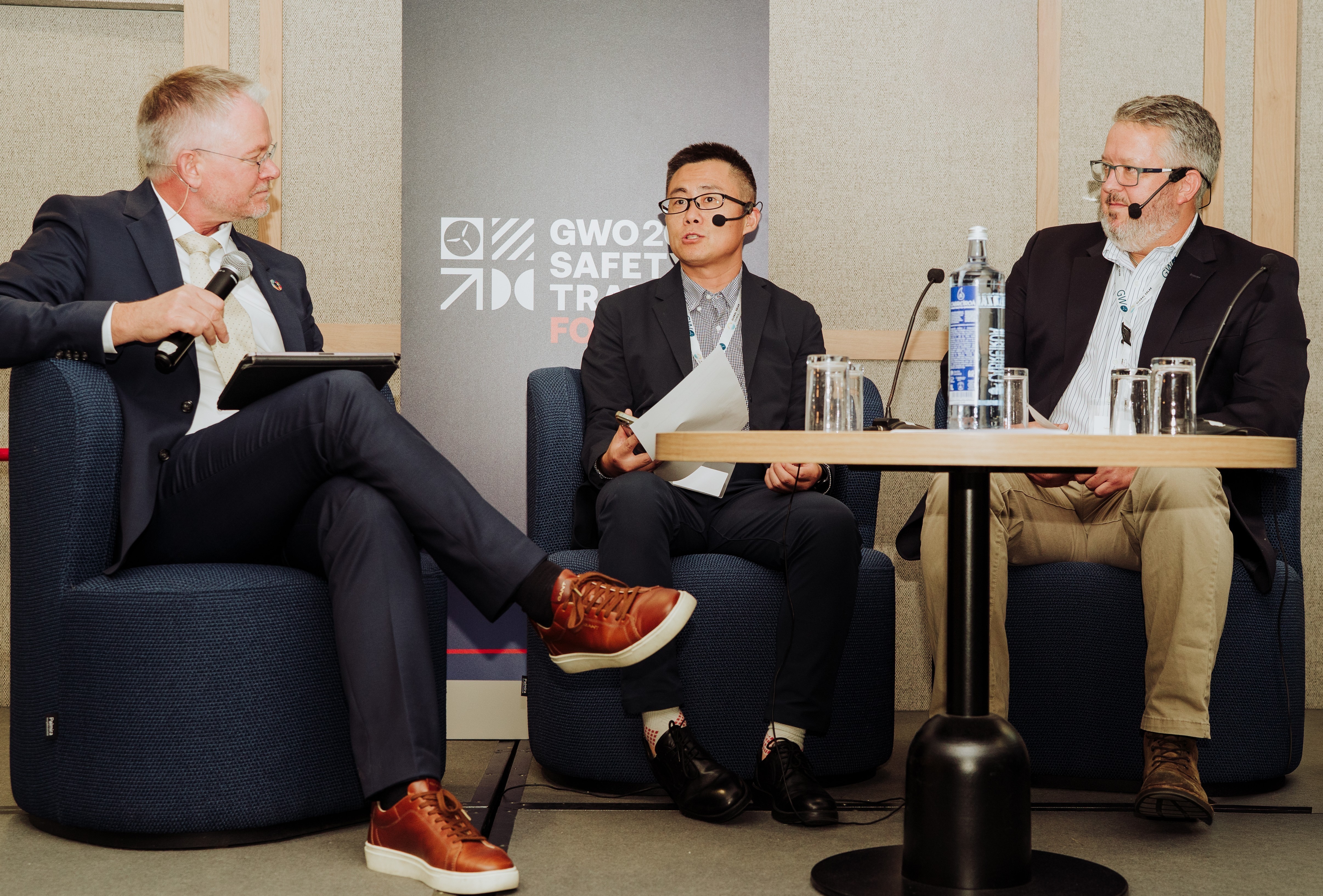
Strategy 2030: GWO Members’ Voices at Forum ’26
As we approach the GWO Safety & Training Forum & Awards 2026, learn more about what’s next for GWO’s workforce development agenda in the opening session of this year’s programme.

GWO Standards Update: Six-Month Grace Period Ends 10 September 2026
Important updates to GWO Training Standards come into full effect on 10 September 2026.
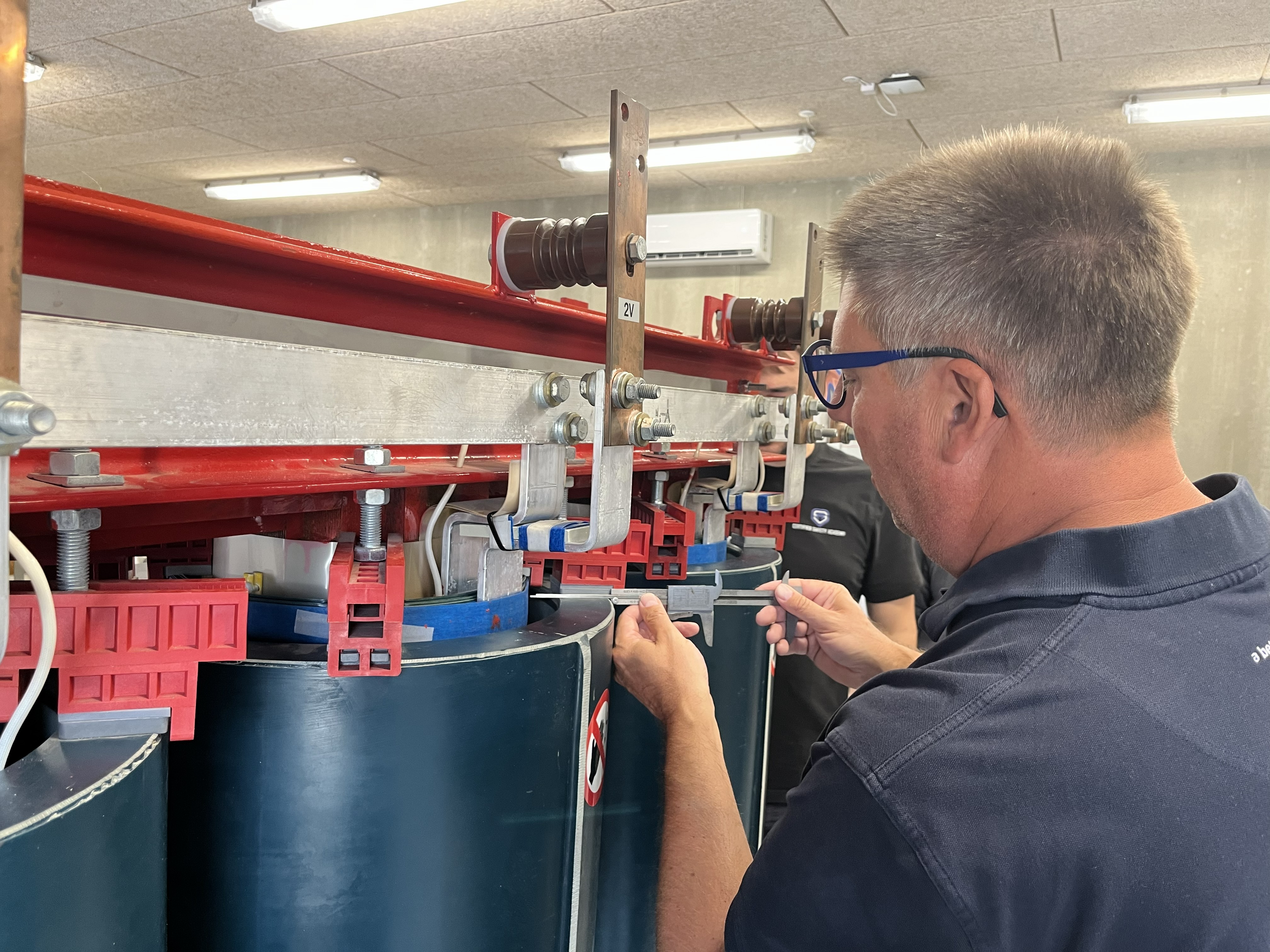
Final Round of Pilots for New High Voltage Modules Reaches Completion
GWO has completed the final pilot of its new High Voltage T-Connector Installation and Transformer Maintenance modules, with feedback from four pilots now set to inform the final training content ahead of release later this year.

Forum ’26: Clarifying Competence for an Evolving Workforce
Explore what competence means in practice in a member-led conversation at the GWO Safety & Training Forum & Awards 2026.

Put Your Products in Front of the Wind & Solar Safety Community
Get your equipment in front of the industry at the GWO Safety & Training Forum in Paris.

Celebrating Excellence: Meet the 2026 GWO Instructor of the Year Finalists
Meet the outstanding talent in our 2026 Instructor of the Year shortlist!