Mapping the Workforce Shift: As New Wind Capacity Ramps Up in India, Continued Investment in Infrastructure and Skills is a Must
The growing demand for wind energy puts pressure on global markets, with varying impacts on each region, including Oceania and Asia. Now the world’s second-largest wind market for new capacity additions after China, India is on track to add a further 40 GW of new installations by 2030, according to the 2025 H1 forecast.
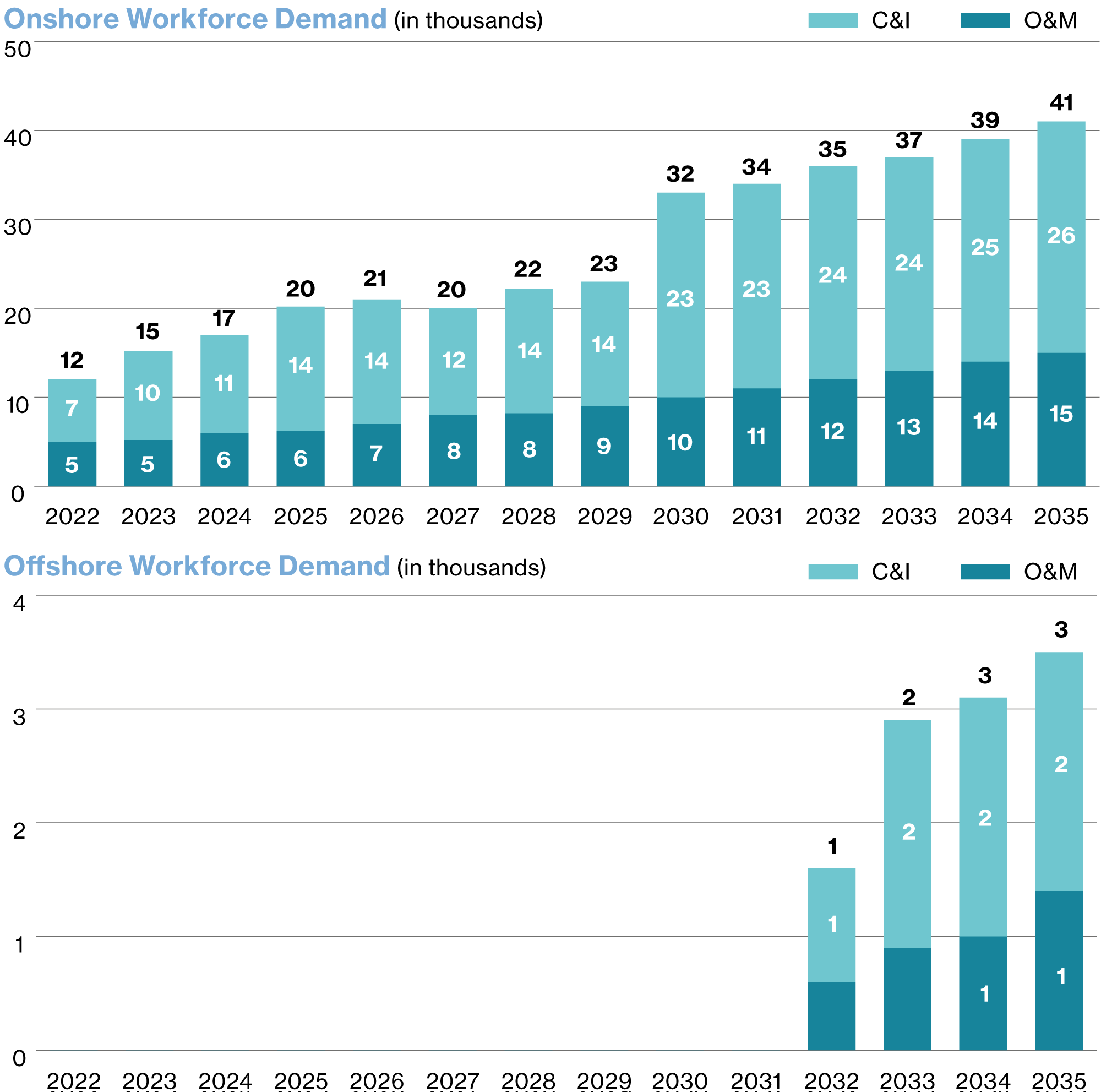
Since India’s clean power auctioning agencies set the momentum for its rapid rise to become the world’s second-largest wind market after China, the country has seen a corresponding increase in the need for a skilled workforce to keep pace with this growth. According to data forecasts from the 2025 H1 Outlook, shared in the GWWO Report and published in collaboration with the Global Wind Energy Council (GWEC), India is on track to add a further 40 GW or more of new installations by 2030. This projected expansion will directly influence the need for professionals spanning a range of job roles in the value chain, from Construction & Installation (C&I) and Operations and Maintenance (O&M) to engineering, manufacturing and long-term service roles. Moreover, workforce projections also highlight the impact of increased onshore deployment and cumulative O&M requirements, as well as an array of technically focused roles across the marine, port and subsea segments unlocked by offshore projects, in the generation of additional employment opportunities.
Onshore Expansion and Offshore Exploration Will Require Sustained Infrastructural Preparation
India’s onshore wind workforce demand is expected to grow by more than 2.5 times between 2023 and 2035, potentially reaching 41,000 professionals by 2035. This growth, coupled with an additional 40 GW of new capacity by 2030, will require successful policy implementation, sufficient investment flow and increased grid readiness. Further dependencies for the onshore segment of the value chain include the volume of construction and commissioning activity, as well as the demand for workforce generated by operational capacity and repowering activities.
Looking ahead to 2030 and beyond, India’s offshore wind market offers a potential of 70 GW for offshore capacity alone. However, as is the case for Australia, the country’s offshore workforce demand is not set to become a reality until after 2030 and is heavily dependent on the government’s successful allocation of offshore wind tenders. Indeed, as the global energy think tank Ember highlights, mitigating early-stage project risks with best-practice tender designs and expanding transmission infrastructure will be crucial for offshore wind projects to get off the ground in India.
Building Skills Development Pathways Key to Aligning Job Roles with Workforce Best Practices
On the strength of initiatives from public institutions, such as The National Institute of Wind Energy (NIWE), a training facilitator and agency of the national government, India has seen the introduction of skills development programmes. One such example is the Vayumitra Skill Development Programme, which was implemented in nine onshore wind states in India. In parallel, the Skill Council for Green Jobs, established in 2015, is aligned with the country’s National Skill Development Mission and works to identify the skilling needs of manufacturers, as well as service users and providers, within the renewables industry.
More recently, the Ministry of Labour & Employment introduced four Labour Codes on Wages, Industrial Relations, Social Security and Occupational Safety, Health and Working Conditions, effective from 21 November 2025. These reforms reflect a greater emphasis on social security and workforce protections and may have an impact on compliance requirements and workforce management for the wind industry. Taken together, these developments highlight the need for a continued alignment between skills pathways and standardised training, to ensure compliance with the latest labour laws.
Whether in onshore or offshore and in C&I and O&M roles and beyond, India’s workforce demand expansion requires preparation, particularly between now and 2030. The GWWO report offers a series of recommendations to help close current gaps, including:
- increased Original Equipment Manufacturer (OEM) participation in Engineering, Procurement and Construction (EPC) and partnership-led project development to heighten workforce demand across civil and electrical works, logistics, commissioning, hybrid system integration, quality assurance, and health, safety and environment;
- stronger coordination between policymakers, industry and training institutions to ensure recruitment, retraining and upskilling efforts to keep pace with installation trajectories.
Want to discover more about workforce demand in this global region? Read our Australia profile, here.
About GWEC
GWEC is a member-based organisation that represents the entire wind energy sector. The members of GWEC represent over 1,500 companies, organisations and institutions in more than 80 countries, including manufacturers, developers, component suppliers, research institutes, national wind and renewables associations, electricity providers, finance and insurance companies.
Find us at: https://gwec.net/.
Follow us on LinkedIn and Instagram.
Contact
Alex Bath, Communications Director, alex@bath.gwec.net
About GWO
GWO is a not-for-profit industry association founded and owned by its members who are drawn from globally leading renewable energy manufacturers, owners and operators. Our members strive for an injury free work environment, setting common international standards for safety training and workforce development. Since 2012, GWO training standards have become widely adopted by wind industry employers, seeking quality, safety and reassurance for their technicians in construction, installation, operations and maintenance around the world. GWO's 2025 Annual Report showed more than 190,000 technicians are trained according to GWO Standards.
GWO member companies
Acciona Energia, Avangrid, BayWa r.e, CGN Wind Power, Copenhagen Offshore Partners, CORIO Generation, CRRC, Dominion Energy, ENERCON, Envision, Equinor, Eurus Energy, FairWind,GE Renewable Energy, Global Wind Service, Goldwind, Muehlhan,The Nordex Group, Northland Power, Ocean Winds, Ørsted, Pattern Energy, Qair, RES Group, RWE Renewables, Shanghai Electric, Skyborn Renewables, Siemens Gamesa Renewable Energy, SSE, TAKKION, Vattenfall and Vestas.
Media Contact Details
Sara Bastholm, Head of Communications
sb@globalwindsafety.org
Featured stories

GWO Safety & Training Awards Winners Unveiled in Paris
At the fifth edition of the Awards, this year’s winners took to the stage following the most closely contested competition to date.

GWO Appoints Alex Øbell Nielsen as Network Development Manager for the Americas
Appointment of experienced professional will assist with furthering the adoption and availability of training standards in the Americas region.
.jpg)
GWO Appoints Morten V. Østergaard as Chief Financial Officer
The appointment of our first Chief Financial Officer (CFO) strengthens GWO's financial governance and provides a robust foundation for the next phase of transformation and growth

One week left to register for Forum ‘26
Don’t miss your chance to engage with the people and ideas shaping the future of the wind and solar industries.
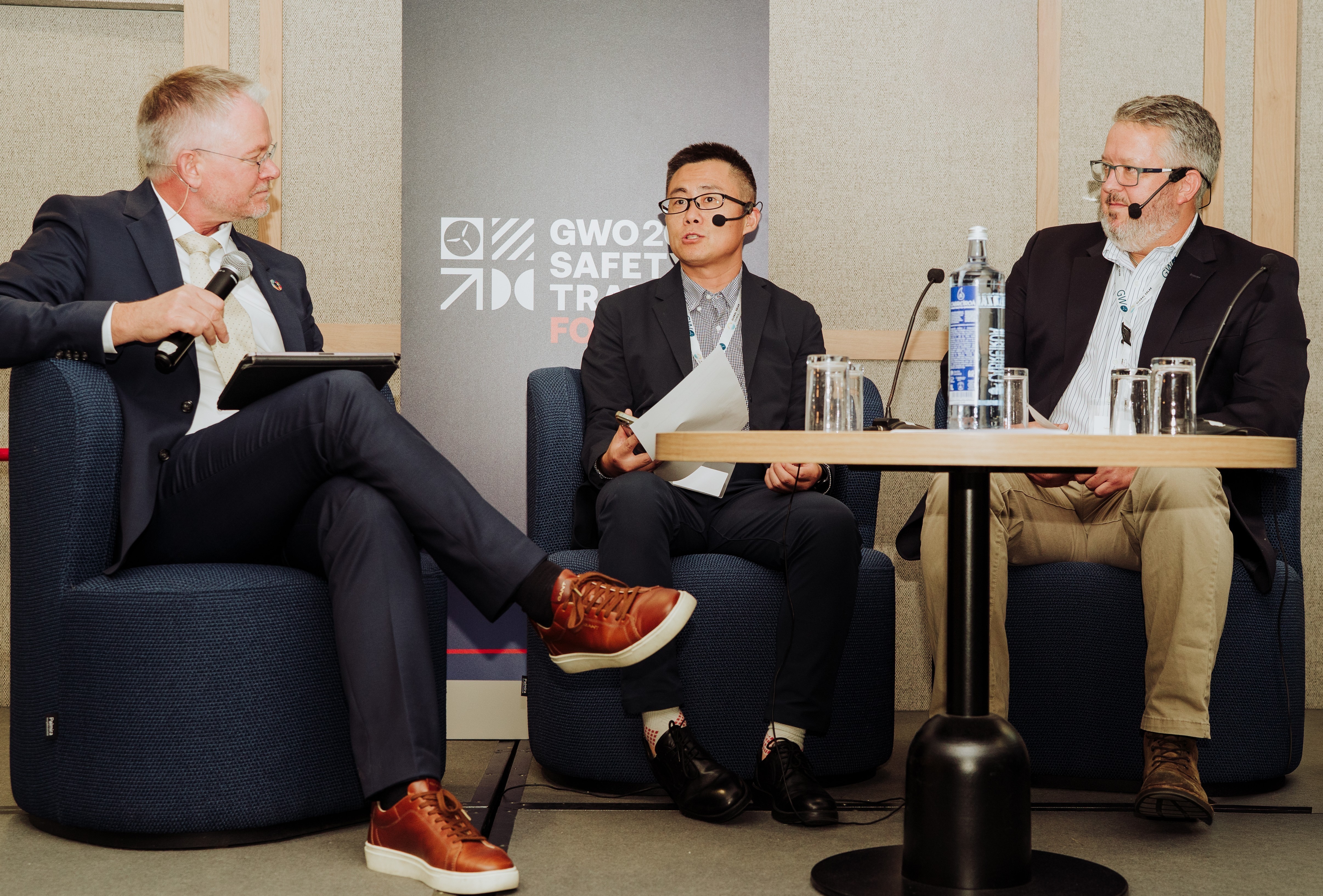
Strategy 2030: GWO Members’ Voices at Forum ’26
As we approach the GWO Safety & Training Forum & Awards 2026, learn more about what’s next for GWO’s workforce development agenda in the opening session of this year’s programme.
GWO Standards Update: Six-Month Grace Period Ends 10 September 2026
Important updates to GWO Training Standards come into full effect on 10 September 2026.