GWO Standard Updates - Effective 10 March 2026
Important updates to GWO Training Standards. Published 10 March 2026

As part of GWO’s continued commitment to high-quality, efficient and industry-aligned training, we have updated eight Training Standards in the wind portfolio, effective from Tuesday, 10 March 2026.
Developed by GWO Working Groups, the updates are designed to ensure best practice and continued relevance for the global energy workforce, while creating different delivery options which provide increased flexibility and customisation of the training portfolio.
In total, eight new standards will be released with varying degrees of change, ranging from structural changes to technical content revisions. The affected standards include:
Basic Safety Training - BST
New version: V20
Replaces BST V19 & BST Refresher V19
Advanced Rescue Training – ART
New version: V6
Replaces ART V5 & ART Refresher V5
Enhanced First Aid – EFA
New version: V6
Replaces EFA V5 & EFR Refresher V5
Wind Limited Access – WLA
New version: V3
Replaces WLA V2
Control of Hazardous Energies – CoHE
New version: V5
Replaces CoHE V4 & CoHE Refresher V4
Basic Technical Training – BTT
New version: V11
Replaces BTT V10
Blade Repair – BR
New version: V6
Replaces Blade Repair V5
Instructor Qualification Training – IQT
New version: V2
Replaces IQT V1
GWO Requirements for Certification
New version: V14
Addendum to Requirements for Certification V14
GWO Requirements for Training
New version: V15
Amendment to Requirements for Training V15
Overview of Updated Standards
Advanced Rescue Training (ART) Standard
Following the ART Review Project, this standard has undergone comprehensive revision. Single Rescuer training is now fully integrated into both initial and refresher ART training modules, removing the need for standalone Single Rescuer modules. Refresher Training has been reduced from three days to two days, with distinct refresher training which includes refreshing Single Rescuer skills.
The standard also aligns rigging and movement methods with current good practice and equipment manufacturer requirements, alongside significant structural and technical clarifications.
Key benefits:
- Updated module structure with clearly defined courses and training durations: 1½-day duration for each initial training (ART-H & ART-N), 1-day duration for each refresher training (ART-HR & ART-NR).
- Embedding Single Rescuer skills within ART-H & ART-N initial and refresher training means simplified course design, less WINDA administration and reduced audit burden.
- Enhanced technical clarity with removal of tensioned line/zip line content and an increased emphasis on cross hauling/manufacturer-compliant rigging practice. '
Basic Safety Training (BST – Working at Height & Sea Survival, incl. BST-R)
BST has been updated following the Working at Height review and updates to the Walk to Work Gangways and Walkways in the Sea Survival Module, as well as the updated design of Refresher Trainings.
The revised standard removes the combined Working at Height & Manual Handling module and combines the Initial and Refresher sections within a single standard. The Working at Height update also ensures alignment with manufacturer requirements and industry guidelines, while clarifying how and when reinforced ladder rungs may be used. There is also the introduction of the new lesson Sea Survival: Walk-to-Work (W2W) , a lesson on safe transfer using motion-compensated gangways .
In addition, all modules have an updated practical-focused refresher training, which applies a more consistent refresher training structure that simulates workplace scenarios across all modules.
Key benefits:
- Improved quality of refresher training within a reduced time frame
- Working at Height training that more closely reflects on-site reality
- W2W closes a previously identified behavioural and safety training gap related to motion-compensated gangway systems used in offshore Walk-to-Work transfers
Basic Technical Training – Installation (BTTI)
Following the BTT Installation Module review, the Installation Module has been split into two standalone modules:
- BTT Installation Mechanical (BBTI-M)
- BTT Installation Electrical (BBTI-E)
The two modules can either be offered as stand-alone training or as a combined delivery. Combined delivery of BTTI-M and BTTI-E is equivalent to version 10 of the BTTI module. Total duration for combined delivery has been reduced to 16 hours (two full days). Participant prerequisites have been removed for participants attending the stand-alone BTTI-E module.
Key benefits:
- Modules aligned to installation job roles
- Reduced overall duration
Control of Hazardous Energies (CoHE) Training Standard
CoHE initial training and refresher training standards are now merged into a single CoHE standard. The CoHE Basic Safety module content has migrated to the Basic Technical Training Standard with a new name: Hazardous Energies Basic Safety (HEBS).
Key benefits:
- CoHE Electrical Safety and Pressure Fluids Safety have simpler prerequisites and reduced durations while maintaining safety training outcomes
- Hazardous Energies Basic Safety (HEBS) as part of the BTT provides an enduring training record. It eliminates redundant topics overlapping BTT Mechanical, Electrical, and Hydraulic modules to allow reduced duration.
Enhanced First Aid (EFA)
There are no content changes to Enhanced First Aid. The refresher training has been merged into the initial standard document for consistency.
Instructor Qualification (IQT) Standard
Based on insights from the IQT Review Project, updates include:
- Description of learning activities removed to allow for flexibility in activity design
- Harmonised assessment criteria for IQT and IQTX participants
- A mandatory teach-back session in IQTX
- All instructor qualification modules are now enduring qualifications.
Key benefits:
- Standardised participant assessment documentation aligned with the Requirements for Training https://www.globalwindsafety.org/trainingproviders/criteria
- Increased opportunities for continuous learning
Wind Limited Access Training Standard (Onshore Module)
This update incorporates changes from the BST Working at Height updates and the Amendment to Ladder Use in Wind Turbine Generators, effective 30 October 2025, ensuring alignment with manufacturer requirements and industry guidelines.
Key benefit:
- Clarifies how and when reinforced ladder rungs may be used
- Align with BST Working at Height updates
Blade Repair
The Blade Repair Standard now includes comprehensive safety training for handling chemical substances (including epoxy and polyester resins) that meets or exceeds relevant pieces of supranational legislation. A new lesson on Chemical Substance Legislation has been introduced.
Key benefit:
- Enables participants to comply with legislative frameworks in global regions when performing Blade Repair tasks.
What Happens Next?
We will be hosting webinars to answer any questions about the practical implications of these changes. The first of these will be held on Thursday, 12 March 2026 and will provide a general overview of all the relevant changes. You can register for this session here.
We will also hold four further webinars in the following weeks – two focusing on changes contained in the BTT and CoHE standards and two focusing on changes contained in the BST and ART standards. In these webinars, impacts on certifications and audits will be explained, as well as any impacts on existing training records.
You can register for these below:
- Deep Dive: BST + ART – Friday, 13 March (AM CEST)
- Deep Dive: BST + ART – Monday, 16 March (PM CEST)
- Deep Dive: BTT + CoHE – Tuesday, 17 March (AM CEST)
- Deep Dive: BTT + CoHE – Tuesday, 17 March (PM CEST)
If you would like to submit a question ahead of time for these four webinars, you can do so via this form. Please note, only the Deep Dive sessions will answer these questions – the initial session is intended as a general overview.
We remain committed to ensuring GWO training continues to meet industry needs and uphold high standards of safety, quality and consistency across the global wind workforce.
Featured stories
WINDA Turns 10: A Decade of Trusted Training Records
This week marks 10 years since the launch of WINDA, GWO’s global Training Records database, now an essential part of the renewables industry’s safety training infrastructure.
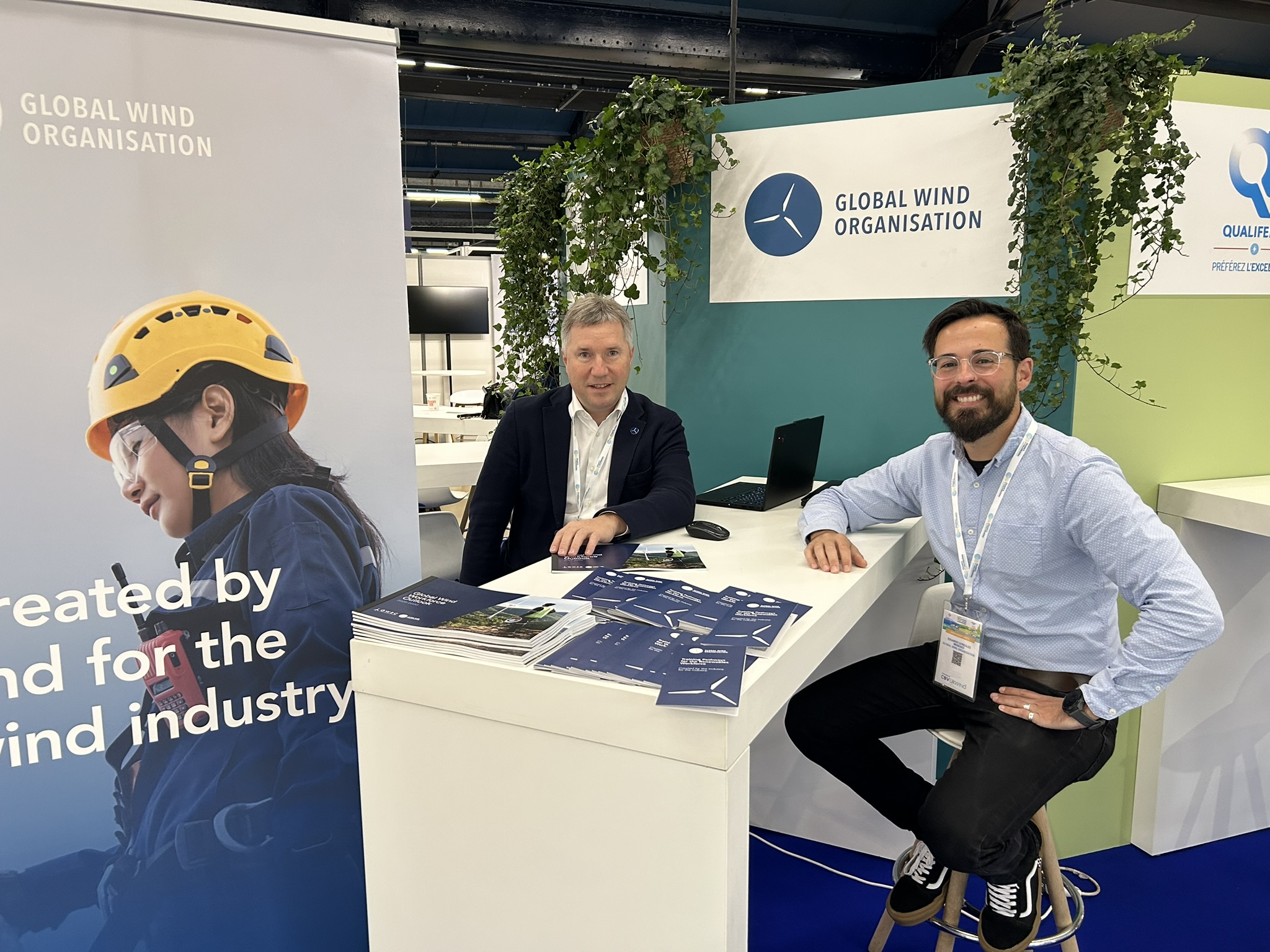
Strengthening industry connections at Colloque Nationale 2026
GWO recently joined renewable energy leaders, education institutions and Training Providers in Paris for the 16th France Renouvelables National Colloquium, to explore opportunities for strengthening workforce development and access to safety training across France's growing wind industry.
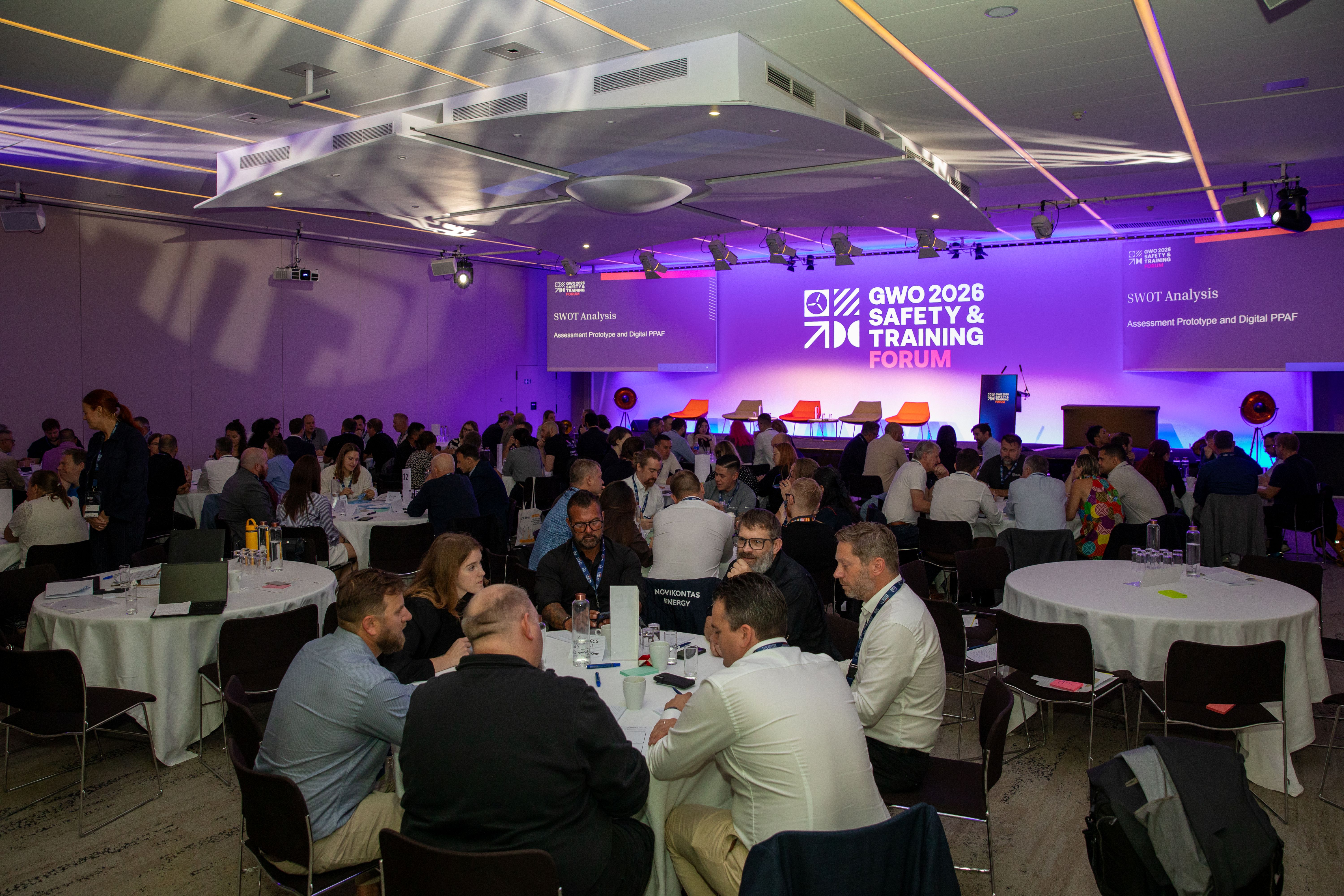
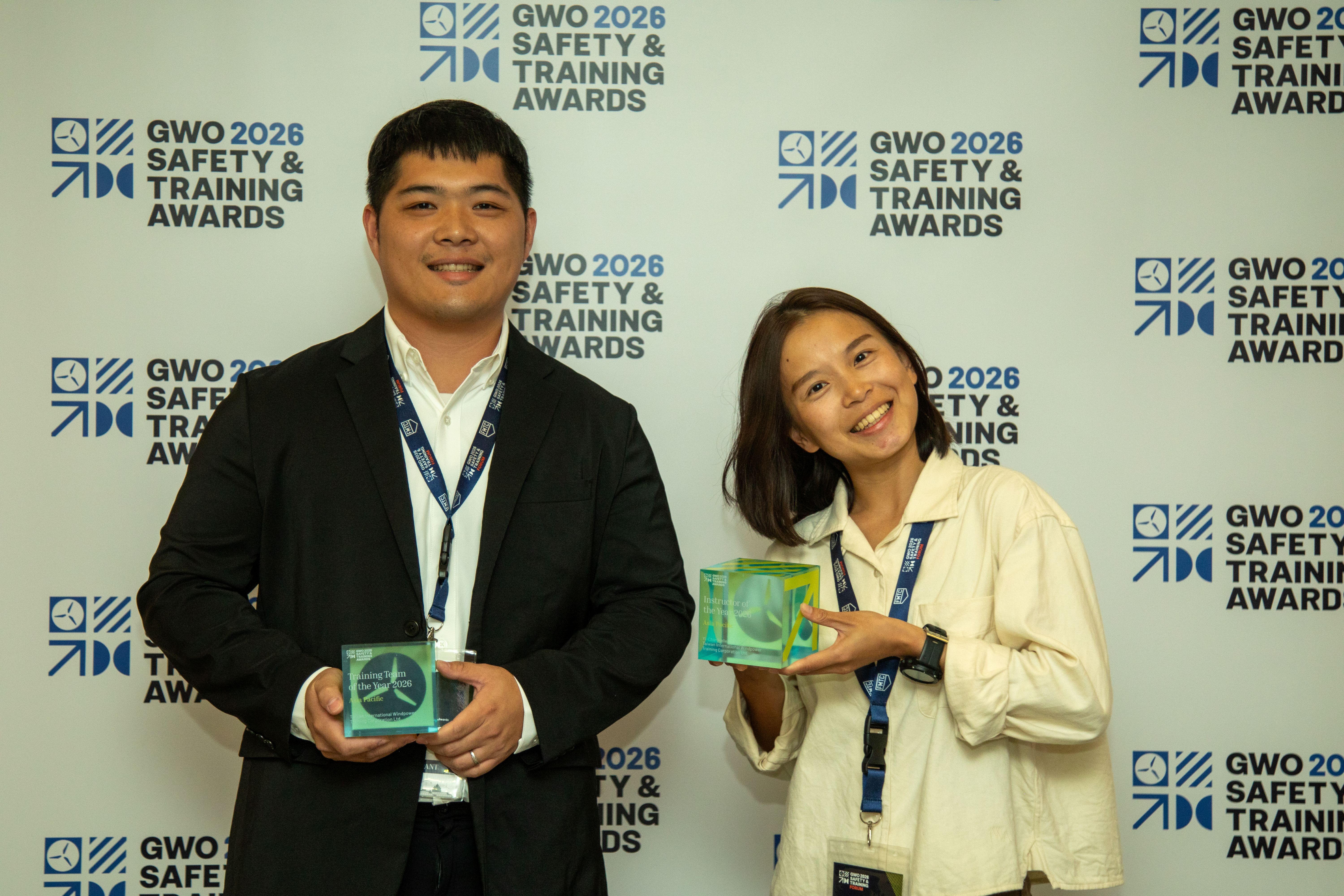
GWO Safety & Training Awards Winners Unveiled in Paris
At the fifth edition of the Awards, this year’s winners took to the stage following the most closely contested competition to date.

GWO Appoints Alex Øbell Nielsen as Network Development Manager for the Americas
Appointment of experienced professional will assist with furthering the adoption and availability of training standards in the Americas region.
.jpg)
GWO Appoints Morten V. Østergaard as Chief Financial Officer
The appointment of our first Chief Financial Officer (CFO) strengthens GWO's financial governance and provides a robust foundation for the next phase of transformation and growth